
“We help companies navigate regulatory gaps so they can bring food products to market efficiently and with full compliance.”
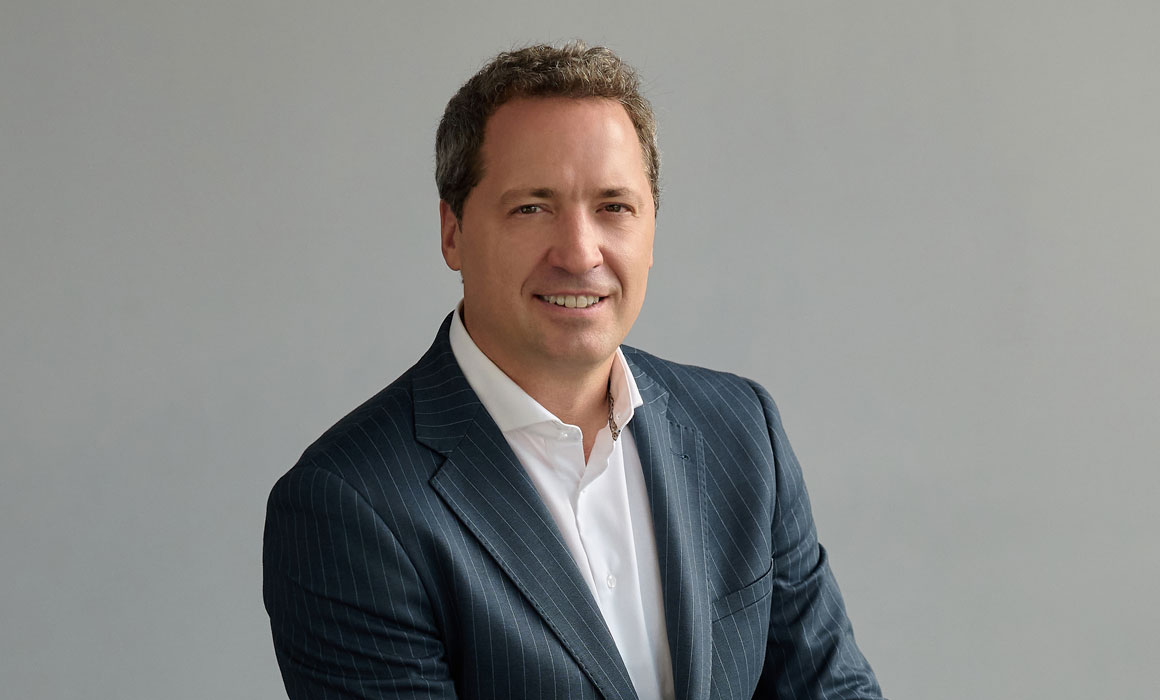
David Pineda Ereño, Managing Director at DPE International Consulting
David Pineda Ereño has an in-depth understanding of the regulatory frameworks governing food, beverages and nutritional products across international markets. But beyond technical expertise, he highlights a less tangible factor that often proves decisive when launching a product abroad: having the right network of contacts to interpret legislation correctly and ensure products reach the market on time and with full guarantees.
Question. Do regulations on food and beverages vary significantly across countries and regions?
Answer. Yes, they can differ substantially, particularly where there is no full regulatory harmonisation. Within the EU, for example, rules are shared across all 27 Member States, but harmonisation is not absolute, so national regulations apply which may vary.
In other regions, we also find examples of regulatory harmonisation on specific food commodities and on general aspects such as food safety, the use of additives or consumer information. This can be seen in Mercosur countries, as well as in parts of Asia, the Middle East and Africa.
A key role is played by the Codex Alimentarius, an intergovernmental body within the UN system that develops international standards on food safety, quality and labelling. While its standards are not legally binding, they often serve as a key reference point and contribute to regulatory convergence, either through direct adoption or incorporation into national legislation.
Q. Is it difficult to introduce a new processed food or beverage into markets such as Europe or Latin America?
Answer. Not necessarily—it depends on both the product and the target market.
In most Latin American countries, prior authorisation from the relevant authorities is required before a product can enter the market, and registration procedures vary depending on the product category.
In the EU, by contrast, products can generally be marketed without prior authorisation, with authorities focusing instead on post-market control. That said, EU Member States may require companies to notify the commercialisation of certain categories.
There is also the category of novel foods—products that were not consumed to a significant degree in the EU before 15 May 1997—which do require prior authorisation before being placed on the market.
We monitor regulatory developments closely to identify the applicable framework and build an effective market access strategy.
Q. At what stage do you step in to support companies entering new markets?
A. Our starting point is always anticipation—identifying regulatory changes or shifts in how rules are applied. We monitor and assess these developments to determine the framework governing a given product or ingredient, and from there we design a tailored market access strategy.
A key part of this process is ensuring that both the composition and labelling of food products comply with local requirements. This includes assessing permitted ingredients, authorised additives, general labelling rules and the conditions for using nutrition and health claims.
Understanding regulatory procedures and import requirements is essential. We offer a comprehensive approach that helps companies navigate these complexities, avoid delays and bring products to market efficiently.
On-the-ground support is essential, both through our network of contacts and in navigating administrative processes, particularly in markets where this is required.
Q. Beyond regulatory processes, how do you support your clients?
A. We work alongside clients in representing their interests before key stakeholders and authorities. In some cases, it may even be necessary to adapt existing regulatory frameworks to enable market entry, based on current scientific evidence.
Local support is crucial—both through our network of contacts and through hands-on assistance with administrative procedures, especially in markets where this is a requirement.
Continuous monitoring of legislation allows us to stay ahead of changes and deliver effective solutions for our clients.
Q. This requires deep local knowledge, doesn’t it?
A. Absolutely. The global regulatory landscape is complex, and many countries have highly developed legal frameworks. Staying up to date is essential.
We invest heavily in monitoring and tracking regulatory developments so we can anticipate changes. Regulations evolve constantly, often in response to new scientific knowledge on product safety, and keeping pace with these changes is key to delivering value to our clients.
Q. Can geopolitical instability—such as the current situation in the Middle East—affect companies’ expansion plans?
A. Without a doubt. The geopolitical context can significantly impact market access. At present, it is not only limiting product launches in certain Middle East markets, but also affecting operational capacity, logistics and transport.
Rising fuel costs are also increasing transport expenses, which in turn affects competitiveness. We hope that hostilities will cease as soon as possible.
Q. The US is one of your key markets. How might changes in its position towards organisations like WHO or the UN affect regulatory frameworks?
A. The US market remains strong. However, the withdrawal of the US from WHO and reduced funding for UN-related bodies such as FAO—both of which provide scientific advice to Codex—may have an impact in the provision of scientific advice in the international standard-setting processes.
With fewer resources available, scientific assessments may take longer, and we are already seeing that certain requests may require additional financial contributions from stakeholders, which could slow progress.
At the same time, FAO is exploring alternative funding models, which could open the door to greater public–private collaboration.
Q. Could this affect US companies’ international expansion?
A. Generally speaking, US companies remain highly competitive and have strong access to global markets, particularly those with free trade agreements, such as the EU and countries like Mexico.
Despite the EU–Mercosur agreement, regulatory differences remain—but we have the expertise to navigate them effectively.
Q. What opportunities does the EU–Mercosur agreement create?
A. After more than 20 years of negotiations, the agreement is finally entering into force, creating significant opportunities. Companies from Mercosur countries will find it easier to access the EU, and we support them through our advisory network and market entry strategies.
For EU products entering Mercosur, the outlook is also positive—these are often higher value-added products, and consumers in countries such as Brazil, Argentina, Uruguay and Paraguay tend to associate European products with high quality.
That said, regulatory differences still exist between—and within—both blocs. Our role is to guide companies through these frameworks and ensure products can enter the market efficiently and in full compliance.
We maintain strong relationships with public institutions and key opinion leaders at international, regional and national level.
Q. What sets your value proposition apart?
A. We provide continuous monitoring of regulatory developments, along with detailed impact analysis on products and ingredients.
We also support the strategic representation of the interests of companies and industry associations, help position their priorities within regulatory agendas, and design engagement strategies with key stakeholders.
Our network—spanning public authorities and opinion leaders at multiple levels—is a key asset in this process.
Where legislation is unclear or incomplete, having the right contacts is essential to ensure a reliable interpretation.
Q. Finally, how would you convince a potential client to work with you?
A. In some markets, legislation is not always detailed or fully developed. In those cases, having access to the right contacts is essential to obtain a reliable interpretation.
Where gaps exist, we help bridge them. We work closely with authorities, validate information and ensure that our clients can bring their products to market on time, efficiently and in full compliance.